The Ultimate Guide to AI Automation Tools: Transforming Work in 2024
Estimated reading time: 6 minutes
Key Takeaways
- AI automation tools streamline workflows, boost efficiency, and free teams for strategic tasks.
- They reduce costs, minimize errors, and deliver precise data insights for better decision-making.
- Successful implementation requires careful assessment, tool selection, and ongoing human oversight.
- Future trends like hyper-automation and advanced NLP expand capabilities.
Table of Contents
- Understanding AI Automation Tools
- Categories of AI Automation Tools
- Benefits of AI Automation Tools
- Implementing AI Automation Tools
- Best Practices for AI Automation
- Future Trends in AI Automation
- Challenges and Considerations
- Success Stories and Case Studies
- Conclusion
- Frequently Asked Questions
Understanding AI Automation Tools
AI automation tools are software applications that leverage artificial intelligence and machine learning to automate repetitive tasks, streamline workflows, and enhance productivity. They can handle everything from basic data entry to complex decision-making processes, making them invaluable for modern businesses.
Categories of AI Automation Tools
The main categories include:
Workflow Automation
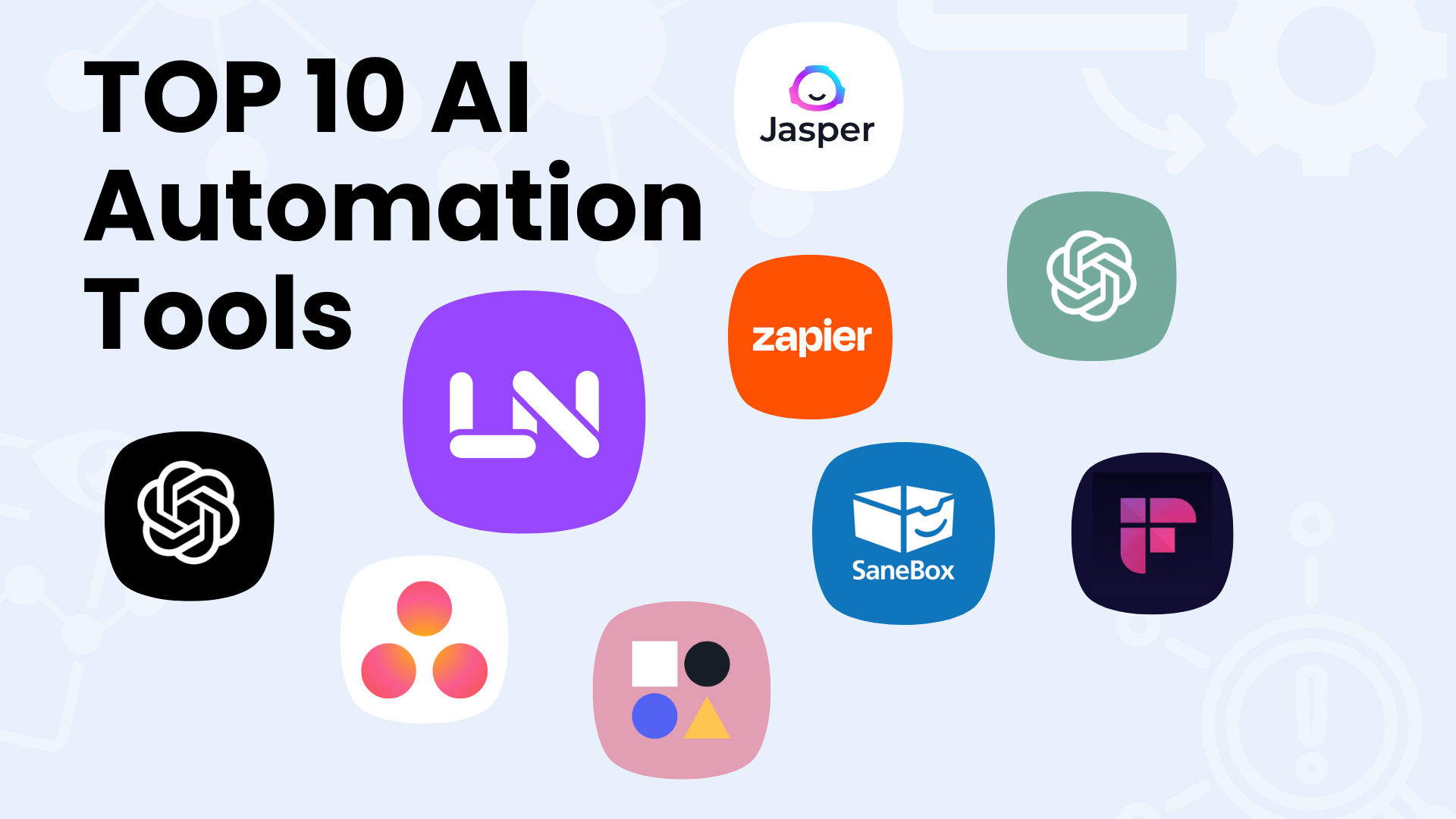
- Zapier: Connects different apps and automates workflows between them.
- n8n: Open-source workflow automation tool with AI capabilities.
- Make (formerly Integromat): Visual automation platform with advanced AI features.
Content Creation and Management
- Copy.ai: Generates marketing copy and content.
- Jasper: Creates blog posts, social media content, and marketing materials.
- Grammarly: Provides advanced writing assistance and proofreading.
Customer Service Automation
- Intercom: AI-powered customer messaging platform.
- Drift: Conversational marketing and sales platform.
- ChatBot: Custom chatbot builder for business automation.
Data Processing and Analysis
- Obviously AI: No-code AI platform for predictive analytics.
- RapidMiner: Advanced analytics and machine learning platform.
- DataRobot: Enterprise AI platform for automated machine learning.
Benefits of AI Automation Tools
Increased Productivity
- Reduces time spent on repetitive tasks.
- Minimizes human error.
- Enables faster decision-making processes.
Cost Reduction
- Lowers operational costs.
- Reduces the need for manual labor.
- Minimizes errors that could lead to financial losses.
Enhanced Accuracy
- Maintains consistent quality in outputs.
- Reduces human error in routine tasks.
- Provides precise data analysis.
Improved Customer Experience
- Offers 24/7 customer support through chatbots.
- Provides faster response times.
- Delivers personalized experiences at scale.
Implementing AI Automation Tools
Assessment Phase
- Identify processes that need automation.
- Evaluate current workflow inefficiencies.
- Define clear automation objectives.
Tool Selection
- Research available options.
- Compare features and pricing.
- Consider scalability and integration capabilities.
Implementation Process
- Start with pilot projects.
- Train team members.
- Monitor and adjust as needed.
Best Practices for AI Automation
- Start Small: Begin with simple processes and expand gradually to manage risks effectively.
- Focus on ROI: Prioritize automation projects with the highest return on investment.
- Maintain Human Oversight: Ensure human supervision for quality control and decision-making.
- Regular Updates and Maintenance: Keep tools updated and review performance regularly.
Future Trends in AI Automation
- Hyper-Automation: Combining multiple AI tools to automate complex business processes.
- Natural Language Processing: Advanced NLP makes tools more intuitive for non-technical users.
- Predictive Analytics: Tools become better at predicting trends and making proactive recommendations.
- Integration Capabilities: Improved interoperability simplifies comprehensive automation solutions.
Challenges and Considerations
- Data Security: Ensure proper data protection measures, compliance, and regular security audits.
- Training Requirements: Provide adequate staff training and support to overcome learning curves.
- Integration Issues: Address compatibility, API limitations, and technical challenges.
Success Stories and Case Studies
- A marketing agency reduced content creation time by 60% using AI writing tools [Source].
- A customer service department handled 3× more inquiries with AI chatbots [Source].
- A financial institution automated 80% of their data entry tasks with AI platforms [Source].
Conclusion
AI automation tools have become essential for businesses aiming to stay competitive in 2024. By selecting the right solutions, implementing them strategically, and maintaining human oversight, organizations can boost efficiency, reduce costs, and enhance customer satisfaction. As technology evolves, these tools will only become more powerful—empowering teams to focus on creative and strategic initiatives.
Frequently Asked Questions
What are AI automation tools?
AI automation tools are software solutions that use artificial intelligence and machine learning to automate repetitive tasks, streamline workflows, and improve productivity across various business functions.
How do I choose the right AI automation tool?
Start by assessing your processes, defining clear objectives, and comparing features, pricing, scalability, and integration capabilities before selecting the best fit for your organization.
Are AI automation tools secure?
Security depends on the platform. Always verify data protection measures, compliance certifications, and perform regular security audits to ensure your automation tools meet industry standards.